
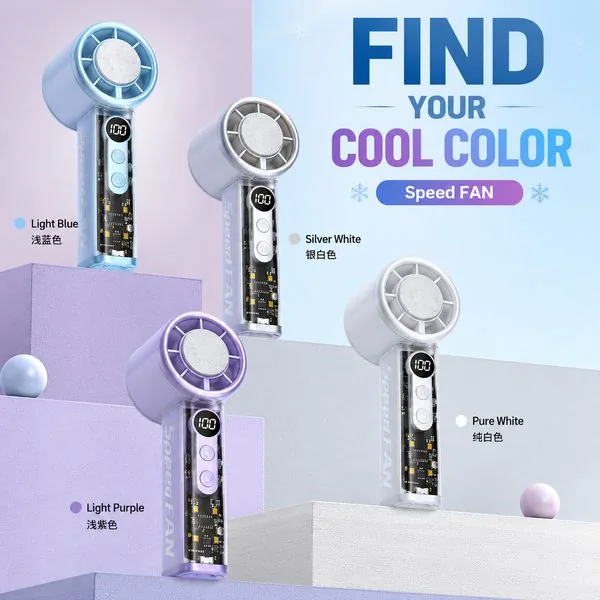
Reference appearance only. Exact model, battery, performance, markings and document coverage require current written confirmation.
What should buyers compare?
| Area | Buyer questions | Evidence to request |
|---|---|---|
| Cooling plate | Where is it located, how large is the contact area, and how is temperature controlled? | Drawing, control description and test record under stated conditions |
| Heat rejection | How is heat removed from the hot side without recirculating toward the user? | Internal layout, vent path and temperature test |
| Airflow | Where is air speed measured and at which operating mode? | Test distance, equipment, ambient conditions and result |
| Battery | What cell, protection, charge input and runtime method apply? | Specification, battery identification and runtime curve |
| Ergonomics | Is the grip stable and are controls usable during operation? | Physical sample, dimensioned drawing and use evaluation |
Why the test condition matters
Cooling-plate temperature changes with ambient temperature, humidity, contact load, operating mode and heat-sink airflow. Runtime changes with fan speed, cooling mode, battery age and charging state. A useful claim therefore includes the sample identity, starting state, mode, ambient condition, measurement location, instrument and duration.
OEM/ODM questions
- Which changes are cosmetic and which require electrical or thermal redesign?
- Does a color, battery, motor or control change affect existing test documentation?
- How is the golden sample identified and retained?
- Which incoming, in-process and final inspections are recorded?
- How are labels, manuals and packaging controlled by market?
Recommended next step
Use the RFQ checklist to define the intended application and compare samples with the buyer testing protocol. Ask for written confirmation before relying on any model-specific number.